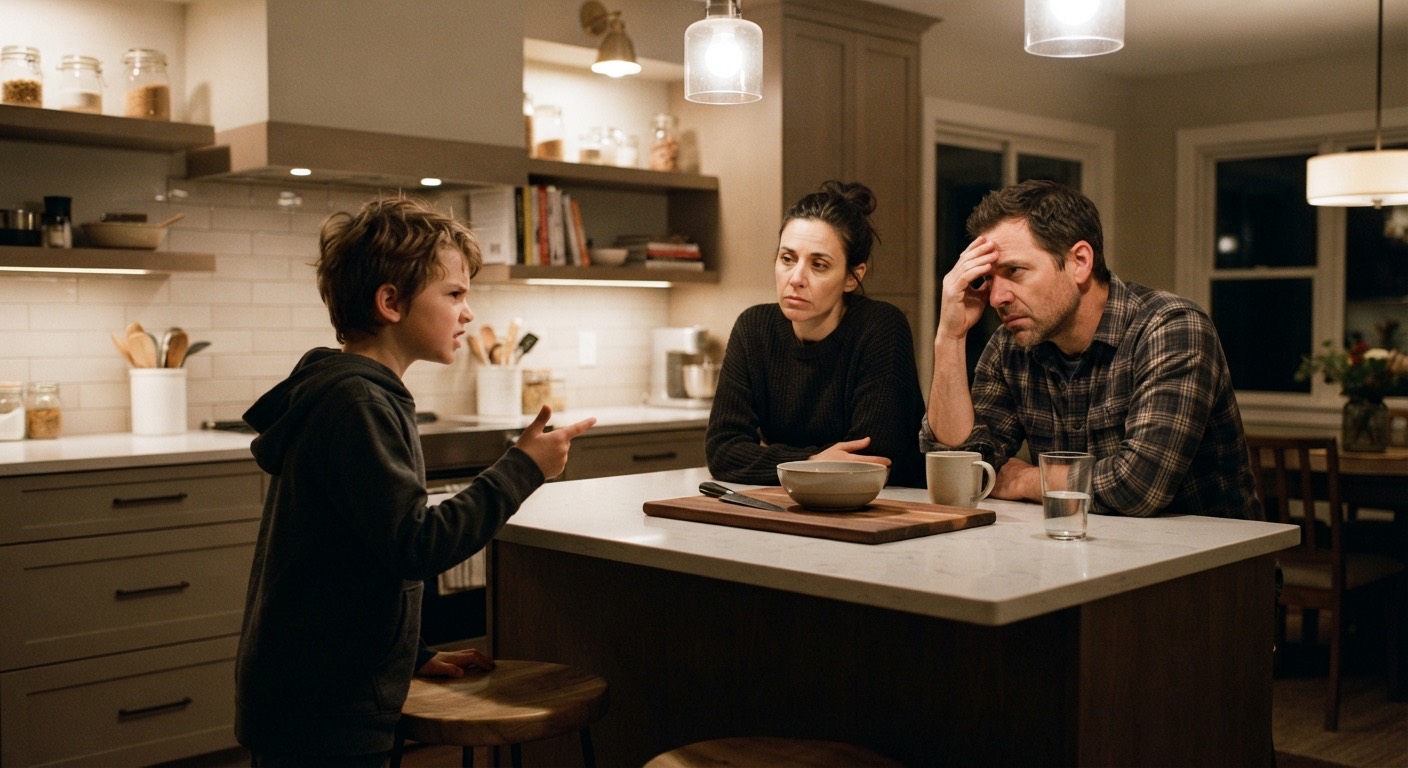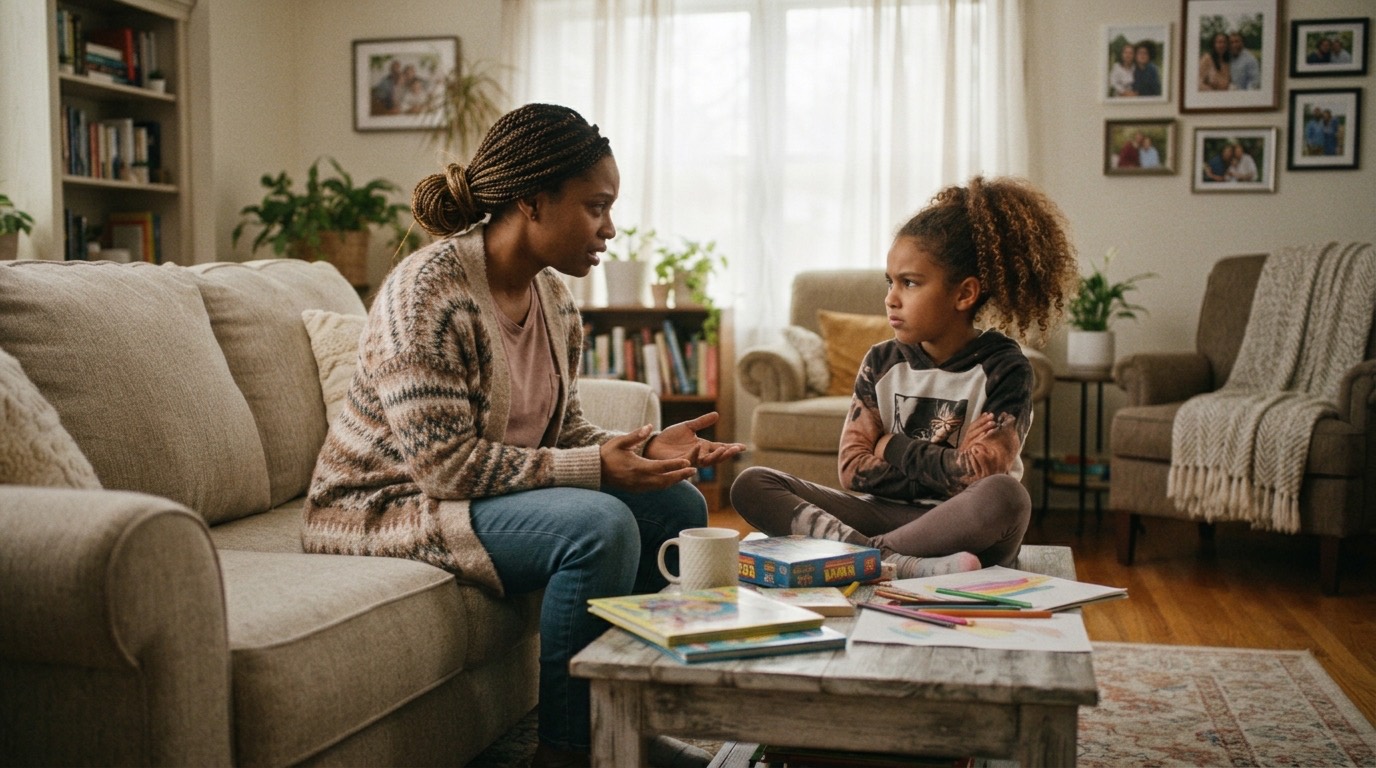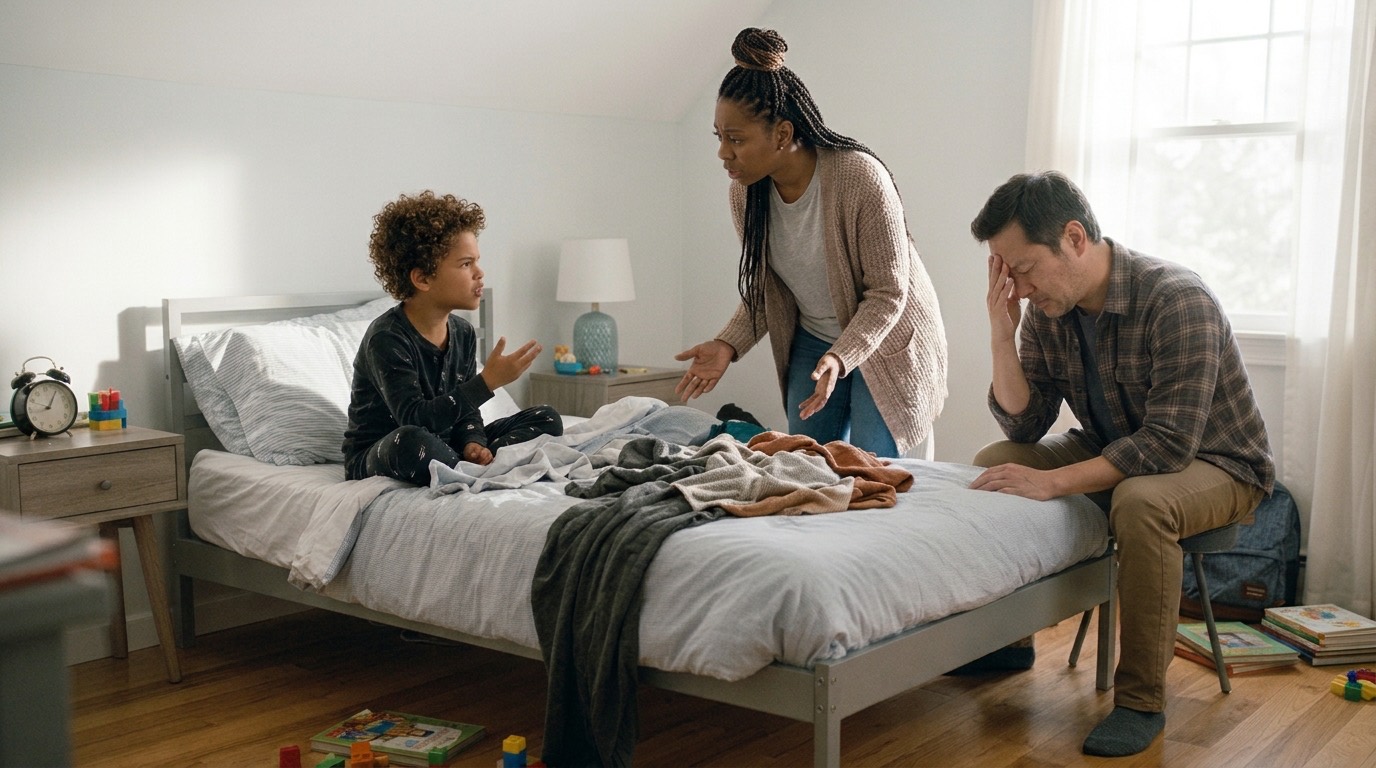
Getting dressed. Brushing teeth. Leaving the house. Coming to dinner. When every single thing turns into a standoff, the day stops feeling like parenting and starts feeling like a hostage negotiation. And it's exhausting in a way that's hard to explain to anyone who hasn't lived it.
The short answer
When a child refuses everything, it's often a sign that what's being asked is more than they can manage right then. That might be about how much they have left in the moment, skills they haven't built yet, or where they are developmentally. Pushing harder doesn't change any of those, so it tends to make things worse. But backing off isn't the only other option. You can fit the ask to what your kid can do, work out a plan with them, change how you ask, help with the hard part, help them refill, and build the skills that make it easier next time.
Which of those helps depends on what's making things hard for your kid. That's where to start, and your kid is often the best source.
Why everything turns into a fight
When a kid says no to everything, it's easy to read it as defiance, or as a battle you have to win. But if firmer limits or consequences fixed it, you probably wouldn't be reading this. A more useful place to start: when a kid can't seem to do something, something is usually getting in the way. So the question isn't "why won't they?" It's "what's getting in the way right now?" Usually, some mix of three things.
Capacity: what they have left right now. Think of it as a tank. Every kid has one, and everything asked of them draws from it: requests, transitions, noise, hunger, even praise. When it runs low, even small requests can tip a kid into fight-or-flight. And it changes. A kid who handled the morning might have nothing left by 4pm, not because the afternoon request was harder, but because the tank was already empty.
Skills: what they've learned to do so far. A lot of everyday demands lean on skills that take years to build: waiting, switching from one thing to another, handling disappointment, getting started, keeping track of steps, putting feelings into words. If a skill isn't there yet, asking louder won't make it appear. "Get ready for school" might be ten steps for a kid who can hold two in their head.
Development: where they are, not where their age says they should be. Kids grow at their own pace, and often unevenly. A kid can be years ahead in reading and much younger when it comes to frustration or a change of plans. Expectations built for "a typical seven-year-old" may not fit the seven-year-old in front of you, yet.
These overlap. A skill that's shaky on a good day can disappear when the tank is low. And the specifics are different for every kid: the toothpaste burns, the socks feel wrong, being told is the hard part, they need some control, they're worried about what's next, or they need you before they can do anything else.
That's why generic advice so often misses. "Be more consistent" or even "lower demands" can't tell you what's hard for your kid, or when. Your kid can.
Some kids hit their limit more often than others, and for them this isn't a phase, it's most days. If that sounds like your kid, and especially if even things they want to do fall apart once they're asked, you may have come across the term PDA. I Think My Child Is PDA. Now What? is a good place to start.
Start with your kid
Get curious
Before changing anything, spend a few days just paying attention.
- Which requests blow up, and which ones slide by?
- When is it worst? Mornings, after school, after a busy weekend?
- What came right before? A transition, a change of plans, a skipped snack?
- How was it asked? An instruction, a question, a countdown, a raised voice?
- What helps, even a little? Humor, time, doing it together, being left alone?
You'll probably find a pattern you didn't expect. (Finding the patterns goes deeper on this.)
Then ask your kid. You can only see so much from the outside. If teeth are always a fight, is it the toothpaste, the brush, the sink being too high, or that teeth mean bedtime is coming? Your kid may be able to tell you. Pick a calm moment, not the middle of the fight, and ask with real curiosity: "I noticed teeth have been really hard lately. What's the worst part?"
Some kids will have an answer right away. Some will need a few options to choose from ("Is it the taste? The brush? Something else?"), or a few tries over several days. Some won't know yet, and that's okay. Even "I don't know" tells you something. And asking tells your kid you're trying to understand, not trying to win.
Match what you try to what you find
| If you notice… | It might be… | Try… |
|---|---|---|
| It's worst after school or late in the day | An empty tank | Time to recharge before anything is asked |
| It's always the same task: teeth, bath, clothes | The task itself feels bad | Change the thing: a different toothpaste, softer clothes, a shower instead of a bath |
| They get stuck at the start or partway through, even on good days | A skill they're still building | One step at a time, doing it alongside them, practicing when calm |
| It's something most kids their age can do, but yours can't yet | Where they are developmentally | Set the bar where they are now, and build from there |
| It blows up the moment you ask, even for things they like | Being told is the hard part | Change how you ask |
| They fight anything they didn't choose | Control matters a lot | Share control |
| It's worse after time apart, or when you're busy | They need you first | A few minutes together before you ask |
These are guesses to check, not prescriptions. Before you buy a new toothpaste, ask your kid whether it's the toothpaste. They may surprise you, and that's useful too.
Ways to help
1. Fit the ask to what they can do
Start with where your kid actually is, not where their age, their sibling, or their classmates are. If a five-step routine is more than they can manage yet, a two-step one isn't lowering the bar. It's setting it where they can reach it.
On hard days, go further, just where it counts. Ask of each demand: does this need to happen, does it need to happen now, and does it need to happen this way? Pajamas instead of clothes on a weekend. Dinner on the couch on a hard day.
This isn't lowering your expectations for their life. It's choosing what your kid gets practice at. A kid who makes it out the door has practiced making it out the door.
2. Work it out together
Once you have a sense of what's hard, bring your kid into deciding what to try. Pick a calm moment, name the problem, share what you need, and ask for their ideas: "Mornings have been rough. You hate being rushed, and I need to get to work on time. What could we try?"
Kids are more likely to go along with a plan they helped make, and their ideas are often ones you wouldn't have thought of. Not every idea will work. Try one anyway, then check back together: what helped, what didn't, what to try next. For younger kids, offer two or three options and let them pick. This is the heart of Ross Greene's approach in The Explosive Child: solving problems with your kid instead of for them.
3. Change how you ask
Say it as an observation. For some kids, the same request costs less when it's information instead of an instruction. Some people call this declarative language.
| Instead of… | Try… |
|---|---|
| "Put your shoes on." | "Shoes are by the door." |
| "Clean up your Legos." | "Those Legos are going to be a trap for my feet tonight." |
| "Come eat." | "Dinner's on the table. I made the noodles you like." |
Share control. Real choices, not fake ones. Let them plan part of the routine, or do it their way even if their way is weird.
Make it play, if your kid likes that. Racing to the car. A stuffed animal who "needs" to watch them brush their teeth. For other kids, this lands as one more thing being done to them. You'll know which one you have.
4. Help with the hard part
Sometimes your kid doesn't have the skill yet, or can't reach it right now. Support bridges the gap while they build it.
- Do it together. "Let's do teeth" costs less than "go brush your teeth."
- Break it down. "Shirt first" instead of "get dressed." A picture list can do the reminding for you.
- Fix what feels bad. If a task hurts or feels wrong, change the task.
- Set it up ahead. Clothes laid out the night before, the bag already packed.
Helping isn't doing it for them forever. It's enough support for things to go okay now, pulled back as they're ready.
5. Help them refill
When the tank is low, skills get harder to reach. You can't fix that overnight, but you can help it refill.
- Protect recharge time after school, big outings, or hard mornings, with nothing asked of them.
- Connection before direction. A few minutes of real attention can change how the next ask lands.
- Take care of their body. A snack before homework can matter more than how you phrase it.
- Bring your own calm. Kids feel pressure in our bodies before they hear it in our words. Sometimes the most helpful thing is to say it once, walk away, and let them come to it.
6. Build the skill, slowly
Some refusals really mean "I can't do this yet." Waiting, switching activities, handling a change of plans: those are skills, and they grow with practice in the moments that go okay, at your kid's pace, not the calendar's. Work on them when things are calm, not mid-meltdown, and ask your kid which ones they'd like to get better at. And when something's going well, stretch a little: add a small piece back, and step back again if it falls apart.
7. When it blows up anyway
It will, sometimes. When it does, drop the demand for now. Your only job in that moment is to keep everyone safe and help your kid calm down. The teeth can wait. Connection and repair come after, when everyone's calm.
8. Treat every try as information
Some things will help. Some won't. Some will help on Tuesday and not on Thursday. None of that is failure. Each try tells you something about your kid. That's the idea behind experimenting without judgment.
Three hard moments, in practice
Getting dressed. If the clothes feel wrong, let them pick and keep favorites in rotation. If it's the number of steps, go one piece at a time, together. If it's being told, put the clothes where they'll see them and leave the room.
Leaving the house. If it's the transition, give more warning and talk about where you're going, not what they're leaving. If it's worry, talk about it the night before, not at the door. If it's the rush, build in more time than seems reasonable. (If mornings are your hardest stretch, here's what we found in more than a thousand of them.)
Bedtime. If it's the end of a long day, shrink the routine to the steps that matter. If it's the separation, build in time together that isn't tied to getting anything done. If it's control, let them run one piece of it.
Where the line is
Making things easier doesn't mean dropping everything. Some things aren't optional: car seats, medicine, not hurting people. Keep that list short and real. For those, say why as a fact ("The car doesn't move until everyone's buckled"), give control around the edges (they pick the music), add support where you can, and stay calm and boring. The less it feels like a power struggle, the less there is to resist.
"Isn't this just giving in?"
It's the question almost every parent asks, and it's a fair one. But look back at the list: most of it isn't doing less. It's helping more: more support, more connection, more working things out together, more practice at the things that are hard. Kids build skills in the moments that go okay, not the ones that explode. More on why it isn't giving in.
How will you know it's working? Not by whether your kid does what you ask. Look for fewer blowups or shorter ones, faster recovery, and more moments where they seem relaxed and like themselves. Give it more than one rough week.
Where NeuraParent comes in
The patterns are hard to see from inside a hard day. Was it the request, the time of day, the transition, or the fact that it was the fourth thing they'd been asked before 8am?
NeuraParent helps you see that. Share what happened, in a few words or a lot, and it builds a picture of your kid over time: what makes things hard, what helps, and whether things are getting better. It works from the kid you describe, not a label, and it will never suggest consequences or reward charts.
If you're tired of carrying all of it in your head, give NeuraParent a try.
FAQ
Is my child just being defiant?
It can look that way, but defiance assumes your kid could do the thing and is choosing not to. More often, it's a kid who can't manage what's being asked right then: tired, overwhelmed, already stretched, or being asked for something they haven't learned to do yet. Looking at when and where it happens is a good way to find out.
Why does my child refuse things they actually want to do?
Because the moment something becomes an expectation, it becomes one more thing on the pile, even if it was their idea. On a low day, wanting to go to the park and being told it's time to go can feel completely different.
Will making things easier mean my child never learns to do hard things?
No. Making things easier now gets you more moments that go okay, and those are where skills get built. As things settle, you can stretch a little at a time and add back what matters, at a pace your kid can handle.
What about rewards and consequences?
They can work for some kids, some of the time. If your kid can do the thing and just needs a reason to get moving, a little structure might help. But if something is more than they can manage right now, a reward doesn't make it easier, and a consequence adds to the pile. That's why NeuraParent starts somewhere else: what's making it hard, and what helps.
What if I've tried everything and my child still refuses?
That's information, not failure. The ask might still be ahead of where your kid is, the timing might be off, or they might need more support, more practice, or more recharge time. Look at when it's worst and when it's easiest; that's usually where the next thing to try comes from. And if you've been trying hard for a long time, you're probably not doing it wrong.