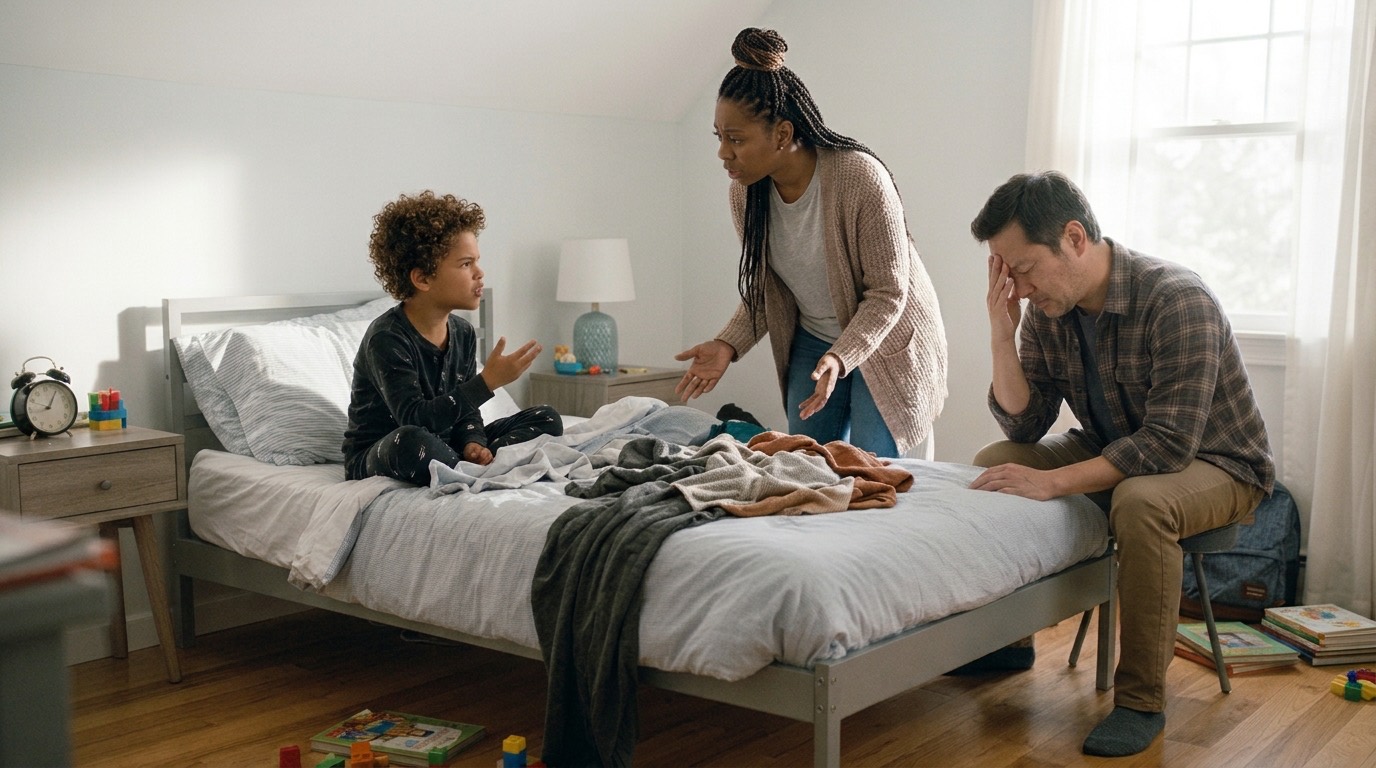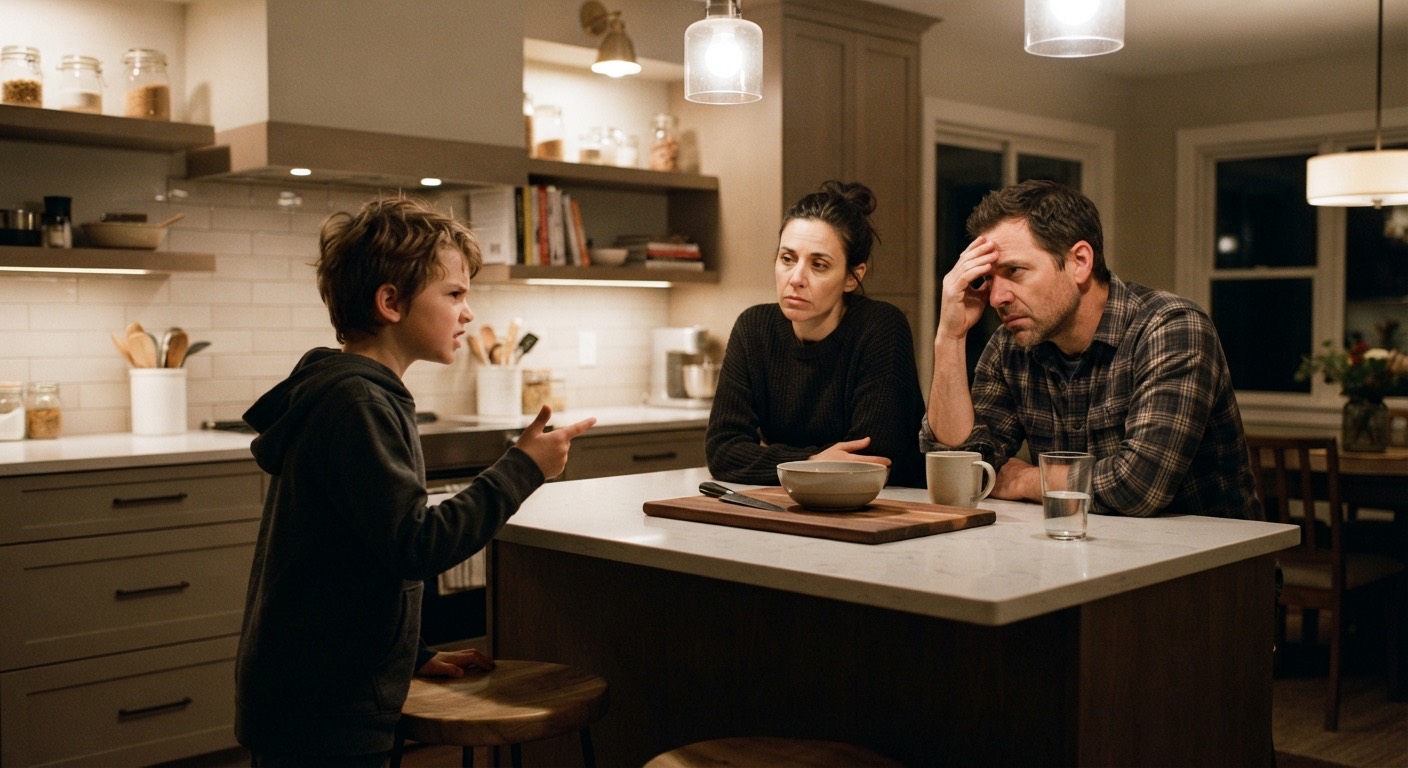
If you're here, you're probably exhausted. You've tried everything. Firmer boundaries. Consistent consequences. Sticker charts that worked for a day and then became another fight. You've heard "he's fine with me" from school, gotten the look at the grocery store, and heard your mother-in-law's opinions about what you're doing wrong a few times. And you've spent more than one late night reading about a term you'd never heard of a year ago: PDA.
The short answer
PDA describes kids who go to great lengths to avoid everyday demands, even things they want to do. A simple request can set off refusing, negotiating, or melting down. It isn't a formal diagnosis in the US, and there's no universal agreement on what it is or what drives it, so getting a clear answer can take a long time.
The good news: you don't have to wait for that answer to start helping your kid. The more useful question right now is whether the approaches that help kids with a PDA profile help your kid. That's one you can start answering this week.
What PDA is, in plain words
PDA stands for pathological demand avoidance, a term first used by UK psychologist Elizabeth Newson in the 1980s. Many people prefer "pervasive drive for autonomy," which gets closer to how it's often experienced: a deep need to be in control of what happens to you.
The PDA community generally describes it as driven by anxiety and a need for control. The way I've come to think about it is capacity. Every demand costs something: a request, a transition, a question, a compliment, being watched, even hunger. When what's being asked adds up to more than a kid has in the tank, their nervous system goes into fight-or-flight. "Put your shoes on" can land like a threat. It isn't defiance. It's self-protection.
That's also why the same request can be fine on Tuesday and impossible on Thursday. The request didn't change. The tank did.
Does any of this sound familiar?
- They wanted to go to the park until you said it was time to go to the park.
- They're brilliant at negotiating, changing the subject, or suddenly needing to do something else.
- Praise seems to make things worse, not better.
- They hold it together at school and fall apart the moment they get home.
- Consequences and rewards don't just fail to work; they seem to make everything harder.
If you're nodding to at least a few of these, you're in good company. These are the moments parents of PDAers describe again and again. How Do I Get My Kid to Listen? goes deeper on what behavior like this is trying to tell you.
Why the label is hard to pin down
PDA isn't in the DSM-5-TR or the ICD-11, the two manuals clinicians use for diagnosis. It's usually described as a profile, most often alongside autism, rather than a diagnosis of its own. Recognition is growing, especially in the UK, but the research is still young, and researchers still disagree about whether it's a distinct thing at all.
In practice, that means some professionals use the term, some have never heard of it, and some are openly skeptical. With evidence still emerging, that skepticism isn't unreasonable. It just isn't much help to you at 7am on a school day.
Wanting a diagnosis makes complete sense. It can bring relief, words for what you've been living with, and a way to find other families who get it. Sometimes it opens doors. But in the US, the PDA label on its own rarely unlocks much, while an autism or ADHD diagnosis can, for example with school supports.
And even the clearest diagnosis comes with a limit. A diagnosis won't tell you how to parent your specific kid.
Talking to professionals: lead with what you see
I've found that leading with the PDA label can make some people stop listening before they hear the rest. Leading with what you actually see when you observe your child keeps the conversation open.
You don't have to win the PDA debate to be taken seriously. Describe your kid. Something like:
"When she's had a long day or a lot has been asked of her, she digs in and escalates fast. Even things she wanted to do become impossible once someone asks. Consequences make it worse, not better."
To customize this to your own child, think about:
- What happens: the refusal, the escalation, what it looks like.
- What sets it off: a request, a transition, a change of plans, being watched.
- When it's worse: after school, when tired or hungry, after a busy day.
- What makes it worse: time pressure, rewards, repeating yourself.
- What helps: choices, humor, backing off, doing it together.
A professional doesn't need to be PDA-informed to support your child. But you may want to ask a few questions before assuming they're a fit, especially if you think PDA is part of the picture. For example, a provider who doesn't ask questions that look beyond your child's behavior, or who immediately recommends a reward chart, may not be right for your family.
The more useful question
"Is my kid PDA?" may take months or years to answer, and you may never get a formal diagnosis. "Does what helps PDA kids help my kid?" is something you can start on now. You don't have to settle the first before trying the second.
If the PDA description resonates, try the approaches it points to:
- Notice which requests are hardest. It's often not the ones you'd expect.
- Notice how your child's capacity fluctuates. Some days, or weeks, are harder than others.
- Lower the pressure. On tough days and weeks, drop or postpone demands that aren't truly necessary.
- Share control. Real choices, a say in the plan, room to do things their way.
- Say it as an observation, not an instruction. "Shoes are by the door" instead of "put your shoes on."
When Your Child Refuses Everything walks through each of these in practice.
How to tell if it's helping. The measure isn't whether your kid does what you ask. Watch for fewer blowups, or shorter ones. Faster recovery. More of the moments where they're relaxed and engaged. A kid who can manage a little more over time, on their own terms.
Give it a fair run. One rough week isn't a test. The "am I just giving in?" feeling makes a lot of parents quit right before things would have started to settle. (It isn't giving in. Here's why.)
"Didn't help" doesn't mean "failure." It might be the wrong technique, a demand that's still too big, or a day when the tank was already empty. Either way, you learned something real about your kid. That's the same idea behind experimenting without judgment: every try is information, not a grade.
And if you're worried about getting it wrong: lowering pressure, sharing control, and paying attention to what drains your kid are low-regret moves whether or not the label ever fits.
If you can't find a PDA-informed professional
You may not, at least not quickly. These are a good place to start:
- Ross Greene, The Explosive Child. Not written about PDA, but built on the idea that kids do well if they can, and that solving problems with your kid beats imposing solutions on them.
- Mona Delahooke, Brain-Body Parenting. Why behavior is often a nervous-system response, and how to work with that instead of against it.
- PDA North America. An organization that supports PDA individuals and their families with education, resources, and community. It offers free webinars and downloads, trainings for parents and professionals, and free, volunteer-led peer support groups, including virtual ones you can join from anywhere.
- PDA Society. A UK charity focused specifically on PDA. It provides information, training, and support for families and professionals, and its website is a good place to read up on PDA in plain language.
Where NeuraParent comes in
The hard part of trying a new approach isn't the first day. It's feeling confident that you're getting it right. And it's telling, weeks in, whether it's actually helping, while you're living through it.
That's what NeuraParent is for. You share what happened, in a few words or a few paragraphs, and it provides immediate support through a PDA-friendly lens. Over time, it builds a picture of your kid: what drains them, what helps, and whether the hard moments are getting shorter. It works from the kid you describe, not a label. It won't tell you whether your kid "has" PDA, and it won't suggest consequences or reward charts.
You don't need it to do any of this. But if doing it all on your own feels like too much, NeuraParent was built for parents of PDA kids.
FAQ
Is PDA a real diagnosis?
Not formally. PDA isn't in the DSM-5-TR or ICD-11, so in the US it can't be diagnosed on its own. It's usually described as a profile, most often alongside autism. Recognition is growing, especially in the UK, but there's still no agreement on exactly what it is or what drives it.
What's the difference between PDA and ODD?
From the outside they look alike: refusing, arguing, melting down when asked. There's good reason to wonder whether there actually is a difference. ODD is a recognized diagnosis, and its criteria describe behavior without naming a cause; PDA is not a formal diagnosis. ODD is usually treated with behavioral parent training, which focuses on how adults respond to behavior. The PDA community tends to focus on anxiety and a need for control as what's underneath. PDA vs. ODD goes into it in full.
Can a child be PDA without being autistic?
Most descriptions place PDA within autism, but it's unsettled, and the evidence is still limited. Either way, the approaches that help are the same, so you can try them without settling the question first.
How do I explain PDA to my child's school or doctor?
Start with what you see rather than the label: what happens, what sets it off, when it's worse, and what helps. A clear description of your kid tends to keep the conversation open, whether or not the person knows the term.