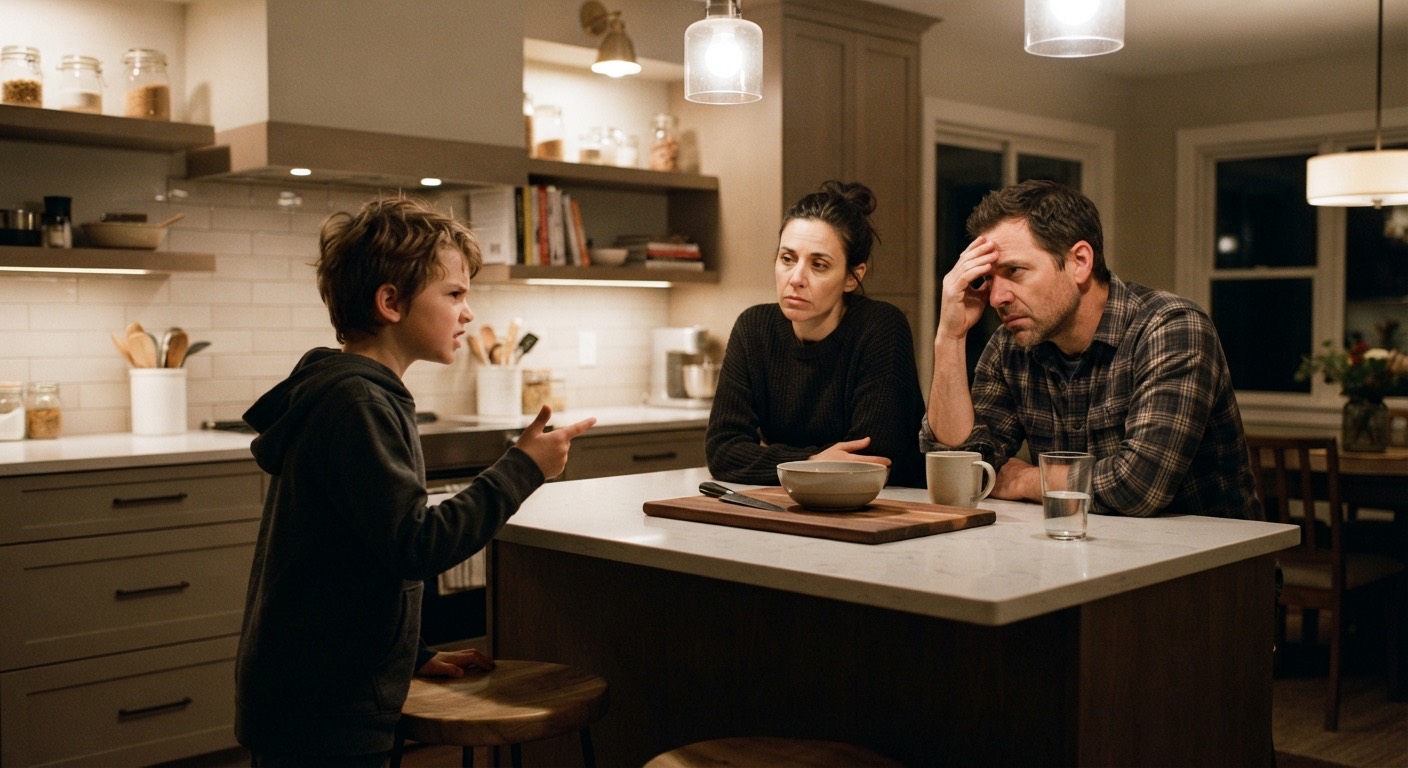
Maybe your child was diagnosed with ODD and something about it hasn't quite fit. Maybe the advice that came with it has made things harder instead of easier. Or maybe someone in a parent group mentioned PDA and you read the description three times, thinking that's my kid. Either way, you're trying to figure out which explanation is right, because you want to know what will actually help.
The short answer
There's no consensus about whether PDA and ODD are different things. From the outside they can look almost identical: refusing, arguing, melting down when asked. ODD (oppositional defiant disorder) is a formal diagnosis, and its criteria describe behavior without naming a cause. PDA (pathological demand avoidance) isn't a formal diagnosis, but the PDA community generally focuses on anxiety-driven need for control as the main driver.
The clearest difference is in the approaches each one tends to lead to. ODD is usually treated with behavioral parent training, which focuses on how adults respond to behavior. The PDA community tends to focus on lowering demands and supporting autonomy. You don't need to settle the label to find out which approach helps your kid.
PDA and ODD side by side
| ODD | PDA | |
|---|---|---|
| Official status | A diagnosis in the DSM-5-TR | Not in the DSM-5-TR or ICD-11; usually described as a profile, most often alongside autism |
| How it's described | A pattern of angry or irritable mood, arguing and defiance, and sometimes vindictiveness, lasting at least six months | Going to great lengths to avoid everyday demands, often through negotiating, distracting, or withdrawing |
| What's said to drive it | The criteria don't say. Researchers point to a mix of temperament and environment, with no single cause | Not settled. The PDA community points to anxiety and a need for control |
| Usual approach | Behavioral parent training: clear expectations, praise and rewards for cooperation, consistent consequences | Lowering demands, indirect language, real choices, collaboration |
The "defiance vs. anxiety" story
If you've read much about PDA online, you've probably seen it explained like this: ODD is defiance, PDA is anxiety. It's a tidy distinction. It just isn't one the research makes.
ODD's diagnostic criteria describe what a child does, how often, and for how long. They don't say why. And ODD research itself links it to emotional struggles: the irritable side of ODD (losing their temper, being touchy or easily annoyed) predicts later anxiety and depression in some studies. So the line between "defiant" and "anxious" is a lot blurrier than it's often made to sound.
PDA research is young and small, and researchers still disagree about whether it's a distinct thing at all. Some recent work ties demand avoidance to anxiety, autistic traits, and sensory differences, but none of it is settled.
None of this means PDA isn't real to the families who recognize their kid in it. It means the honest answer to "what's the difference?" is less certain than most of what you'll read.
What is different: the approach
Where the two really part ways is in what you'll be told to do.
Behavioral parent training, the usual recommendation for ODD, has a real research base. It focuses on how adults respond: clear expectations, praise and rewards for cooperation, consistent consequences.
The approaches the PDA community recommends go the other way: fewer demands, requests phrased as observations instead of instructions, real choices, and solving problems together.
Looking past the label
The label may not be where the answer lives. Starting from capacity can be more helpful. Every demand costs a kid something, and when what's being asked adds up to more than they have in the tank, behavior escalates. Kids with developmental differences like autism and ADHD, or past trauma, tend to hit that limit more often. Through that lens, it matters less whether you call it ODD or PDA, and more what's draining your kid and what helps them handle a little more over time.
Seen that way, rewards and consequences are focused on the wrong problem. They "treat" motivation: they assume your kid could do the thing and just needs a better reason to. But if the real issue is that the demand is more than they have right now, a reward doesn't make the tank any bigger, and a consequence adds one more thing to it. That's why NeuraParent never suggests them. It starts with what's draining your kid and what helps instead.
That isn't to say they never help. Rewards and consequences can be the right approach for some kids some of the time. Some kids do have the capacity, and a little structure or a reward is what gets them moving. If that's your kid and it's working, use it. It's a question of where to start. Understanding what's underneath and lightening the load is low-risk either way. Adding pressure to a kid who's already out of capacity usually isn't.
What to do either way
Start with the kid in front of you. Before changing anything, get curious about your child. What drains them? When are things worst: after school, when they're tired, after a change of plans? Which requests blow up, and which ones slide by? What helps, even a little? Patterns usually show up faster than you'd expect once you're looking for them. Finding the patterns goes deeper on how.
Then lighten the right load, in the right way. The goal isn't to drop demands across the board. It's to ease up on the ones that cost your kid the most, at the times they cost the most, in the way that works for them. That might mean fewer steps in the morning routine, a different way of asking, or more say in the plan. When Your Child Refuses Everything walks through the options.
Measure the right thing. Not compliance. Watch for fewer blowups, shorter ones, faster recovery, and a kid who seems more like themselves.
Give it a fair run. One rough week isn't a verdict, in either direction.
Trust your instincts. If you've been trying hard, and trying consistently, and something still isn't working, you're probably not doing it wrong. It's much more likely that the approach doesn't fit your kid. You see your child in more moments than anyone else does, and the feeling that something isn't right is worth listening to. You're not doing it wrong.
Tell your child's doctor what you're seeing. If the advice that came with an ODD diagnosis isn't working, that's important information. Describe what happens, what sets it off, when it's worse, and what helps. "Consequences make it worse" is one of the most useful sentences you can bring to that conversation.
Remember that any label has limits. A diagnosis won't tell you how to parent your specific kid, and that's true whichever label you end up with.
If you're earlier in the process and still wondering whether PDA fits at all, start here.
Where NeuraParent comes in
Whether your kid has an ODD diagnosis, fits the PDA description, both, or neither, the work is the same: figuring out what drains them, what helps, and whether what you're trying is working.
NeuraParent helps with exactly that. You share what happened, and it builds a picture of your kid over time, working from the child you describe, not a label. It won't diagnose, and it won't suggest consequences or reward charts.
If you'd like help seeing the patterns, see how NeuraParent works for PDA kids.
FAQ
Can a child have both PDA and ODD?
On paper, yes. ODD is diagnosed based on behavior, and a child who fits the PDA description can also meet the criteria for ODD. Whether they're truly separate things is still an open question. What matters most is which approaches actually help your kid.
Is PDA just ODD with a different name?
Maybe. It's genuinely unsettled. The two describe a lot of the same behavior, and neither one comes with an agreed-upon cause. The clearest difference is in the approaches each tends to lead to.
Is ODD defiance and PDA anxiety?
That's a common way to explain it online, but it isn't what the research says. ODD's criteria don't name a cause, and some ODD research links its irritable side to later anxiety and depression. The PDA community focuses on anxiety, but that's a description, not a settled finding.
What should I tell my child's doctor if the ODD diagnosis doesn't seem to fit?
Describe what you're seeing: what sets it off, when it's worse, what makes it worse, and what helps. If rewards and consequences make things harder, say so. A clear picture of your kid gives any professional more to work with than a label does.